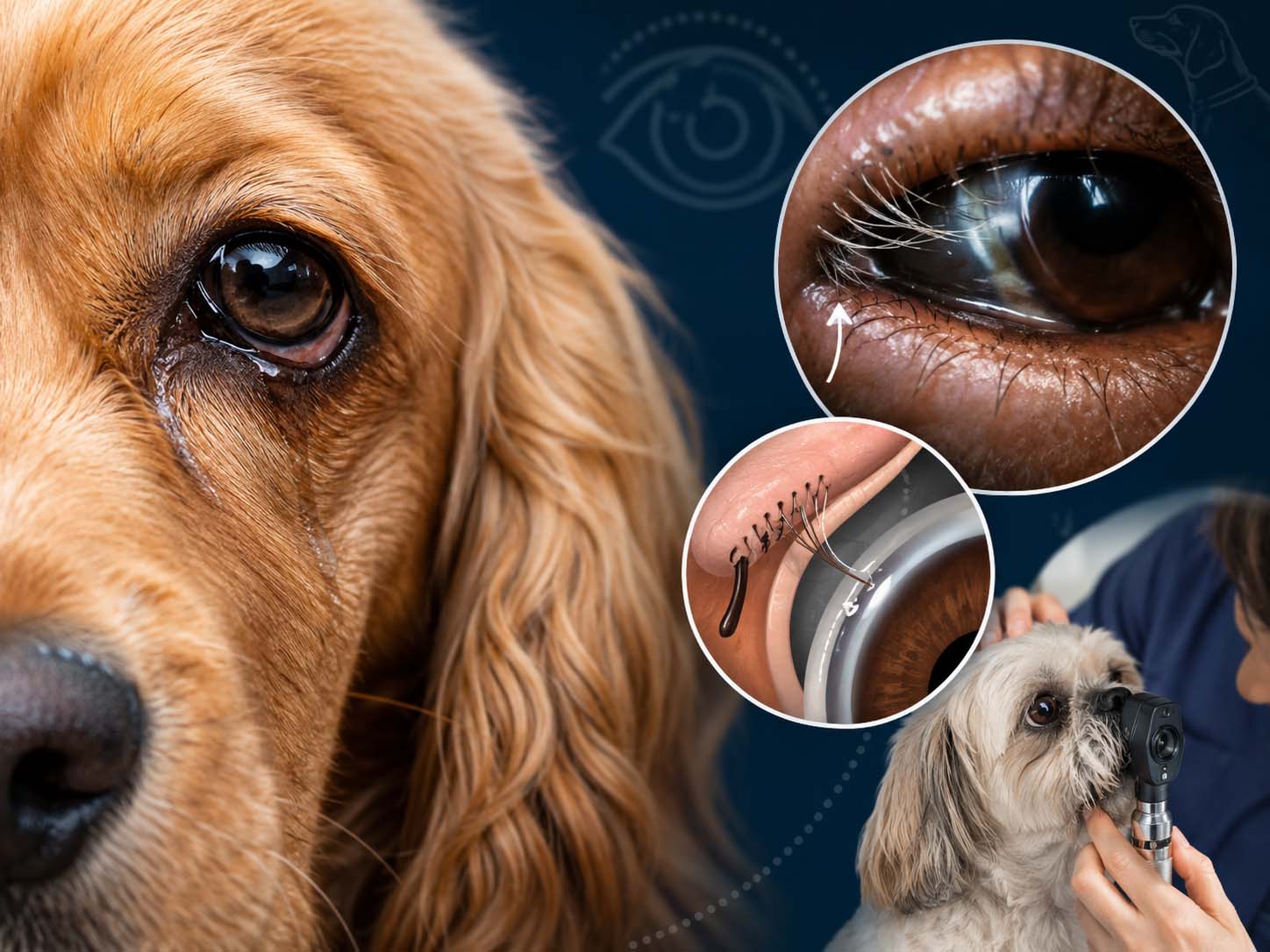
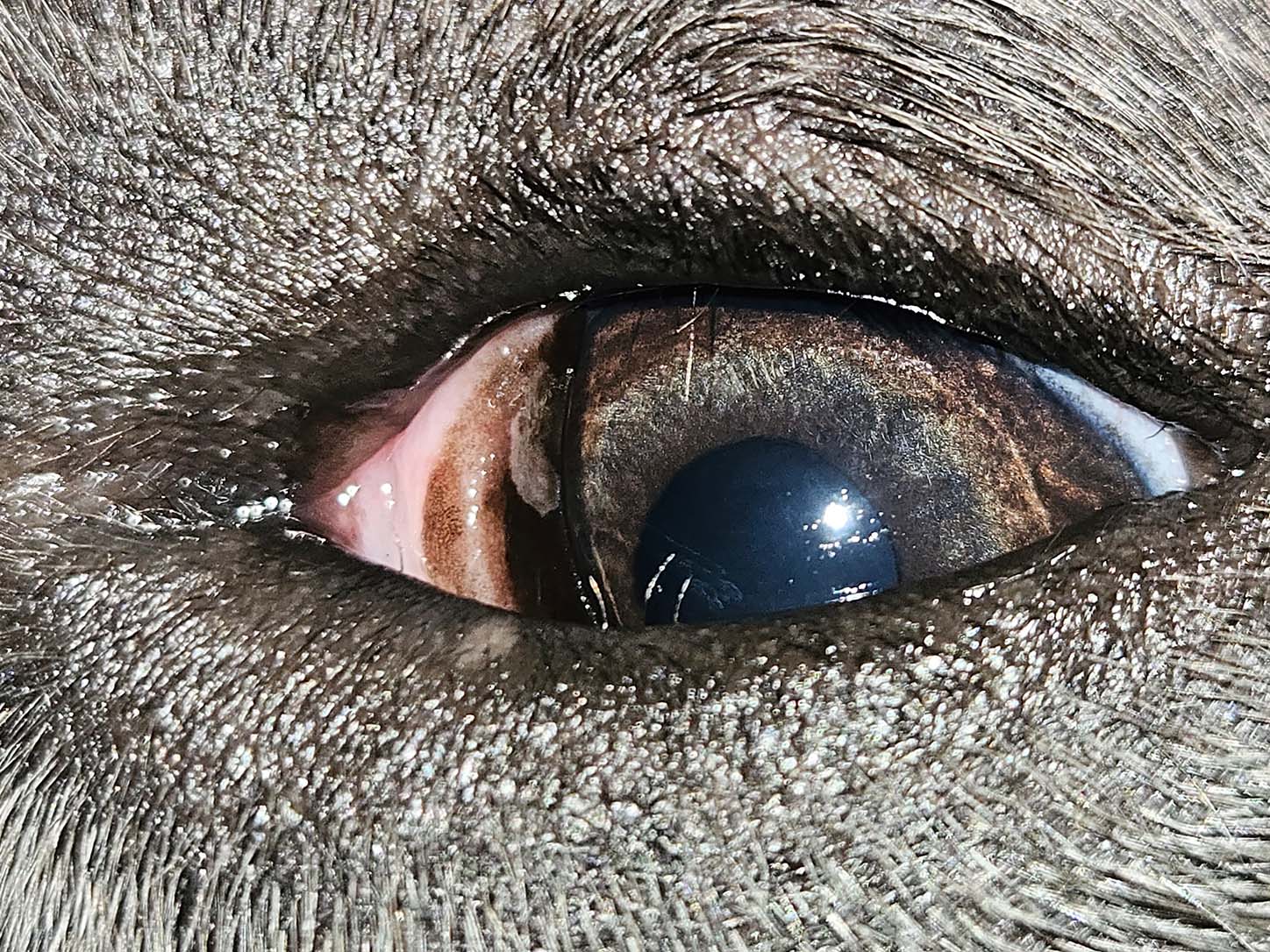
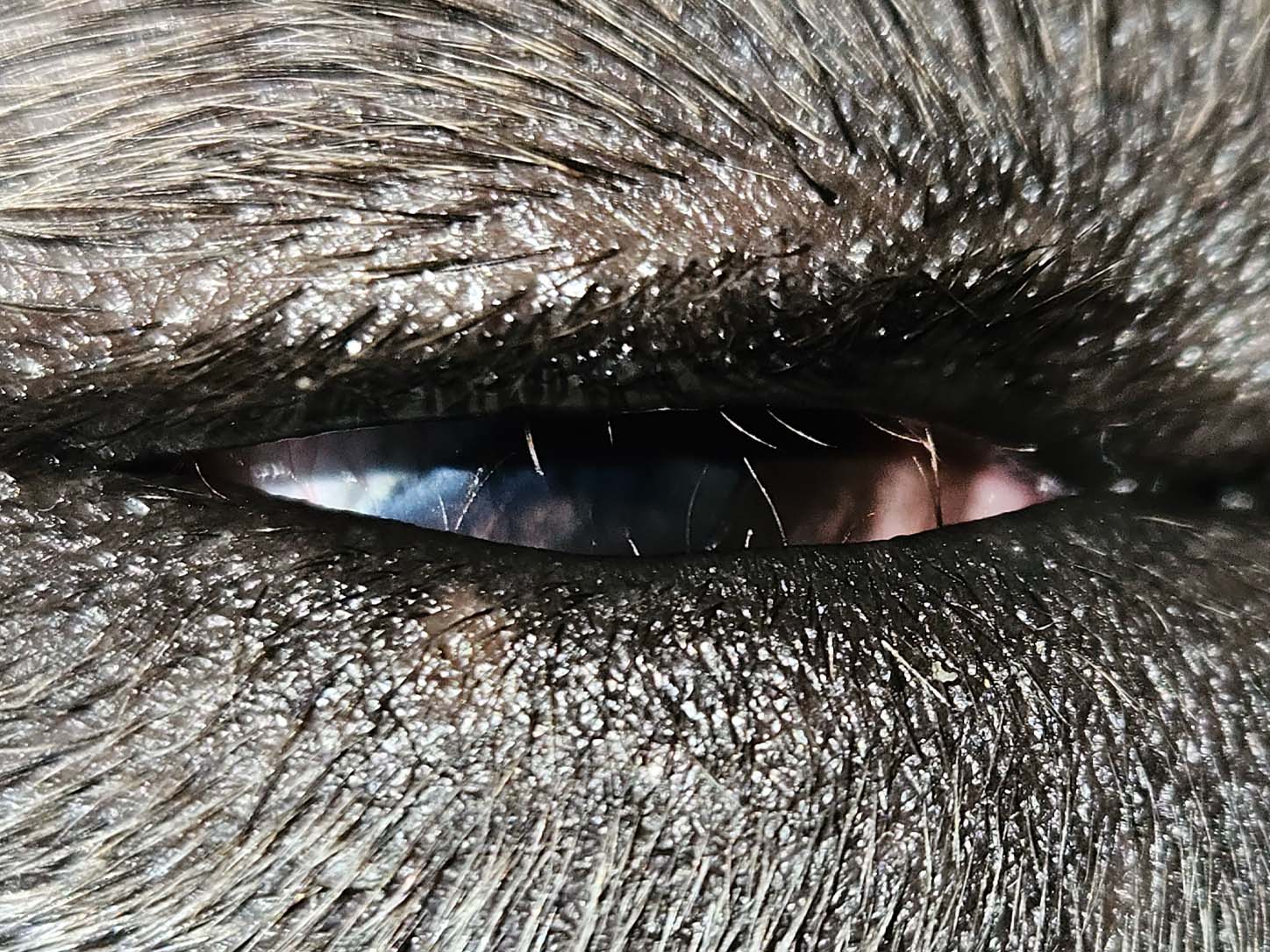
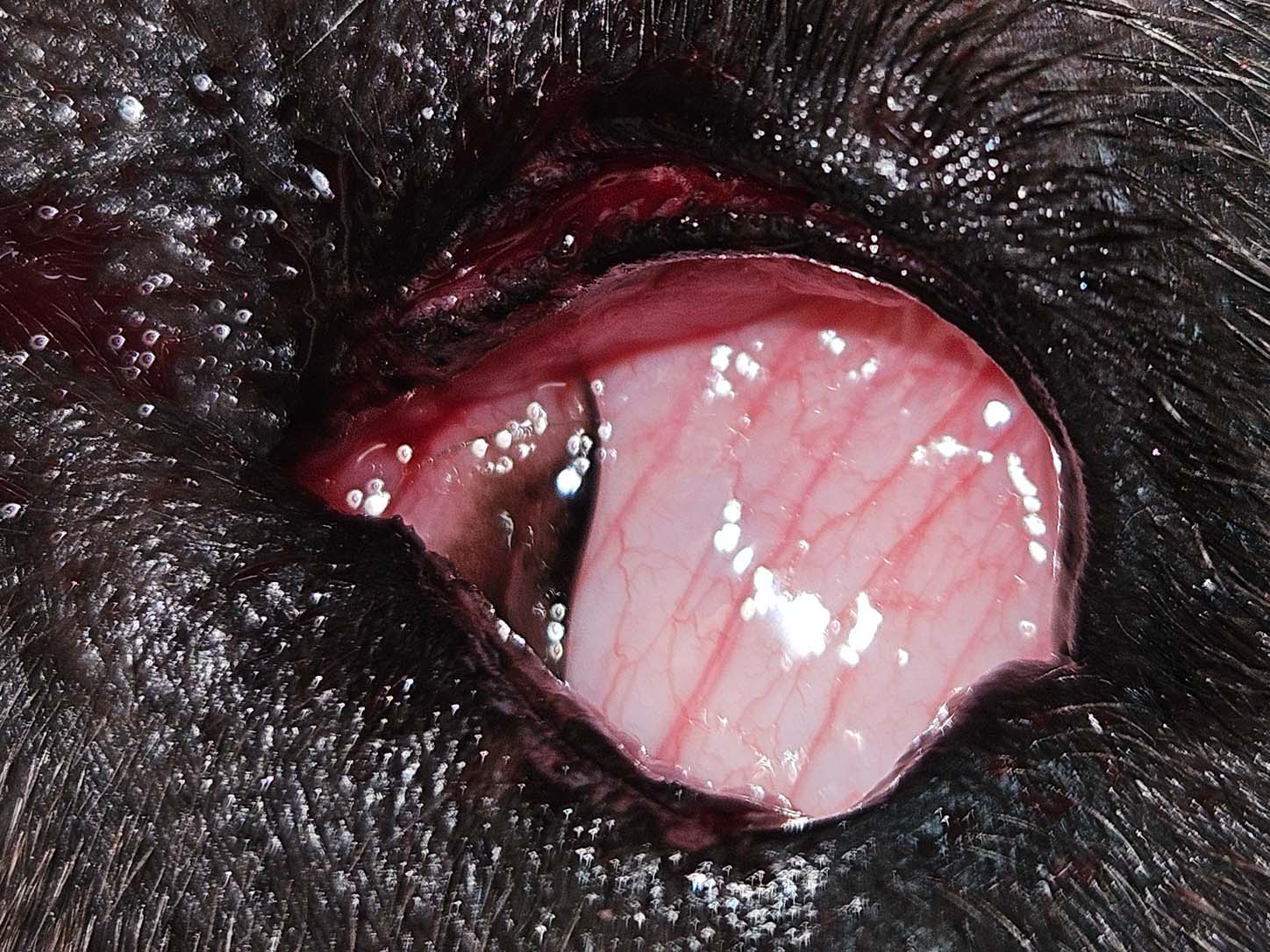
We recently treated a patient who came to us with a persistently watery right eye. After a thorough examination, we diagnosed a condition called distichiasis, where extra eyelashes grow from the eyelid margin and rub against the surface of the eye.
In this case, extra eyelashes were present in both eyes and affected the upper and lower eyelids. The right eye was more severely affected than the left, which explained the increased watering. Apart from the eye concern, our patient was in great overall health.
What is distichiasis?
Distichiasis is a condition in which extra eyelashes grow from the glands located along your pet’s eyelid margin. These abnormal hairs can come into contact with the surface of the eye, causing irritation and discomfort.
Some pets have only a few soft hairs that never cause a problem. Others develop stiffer lashes that rub against the cornea, which is the clear surface of the eye. When this happens, every blink can cause irritation, discomfort and, in more serious cases, corneal ulcers.
Commonly affected pets
Distichiasis is most commonly seen in dogs and is often an inherited condition. Breeds such as Staffordshire Bull Terriers, Cocker Spaniels, Cavaliers, Golden Retrievers, Labradors, Shih Tzus, Bulldogs and Boxers appear more prone to it, although any dog can develop distichiasis.
Signs to watch for
Symptoms vary depending on how many extra lashes are present and how stiff they have grown. Common signs include:
- Watery eyes or excessive tearing
- Squinting or frequent blinking
- Redness or eye discharge
- Pawing or rubbing at the face
- Sensitivity to light
- Recurrent eye infections or ulcers
If left untreated, chronic irritation can lead to pain and lasting damage to the surface of the eye.
How is distichiasis diagnosed?
Diagnosis begins with a detailed eye examination. Your vet will carefully inspect the eyelid margins for abnormal eyelashes and check the surface of the eye for signs of irritation or damage.
Some extra lashes can be very fine and difficult to see, so magnification and specialised lighting are often needed to identify them.
Treatment options for distichiasis
Treatment depends on the severity of the condition and the degree of discomfort it is causing. For mild cases, lubricating eye drops may be enough to keep your pet comfortable. However, if the extra lashes are repeatedly rubbing against the eye, a more permanent treatment option is usually recommended.
At Melbourne Pet Surgery, we perform a procedure that removes the hair follicles of the offending lashes so they do not grow back. Occasionally, a repeat procedure is needed to ensure every offending follicle has been removed. The goal of treatment is simple: to improve your pet’s comfort and protect the eye from ongoing damage.
Treatment cost
We charge from $1,700 to $1,800 for this procedure.
When should you see your vet?
Persistent watery eyes should never be ignored. Although they may seem minor, they can be a sign of several eye conditions, including distichiasis. The earlier the condition is diagnosed, the easier it is to treat, and the sooner your pet is comfortable again.
If your pet has ongoing tearing, redness, squinting, or seems bothered by their eyes, booking an eye examination is the best way to keep them healthy and comfortable.
Healthy eyes mean a happier pet!