Know the Signs: Protecting your pet from Pyometra
We recently saw a patient with a one-week history of frequent vomiting, despite still eating and staying active at the park. She had also been on heat just a few weeks prior. A sudden change occurred when the owner noticed watery, blood-tinged discharge from the vulva — a key sign that something more serious may be happening. On examination, most findings were normal, but there were two important concerns:
- Blood-stained discharge from the vulva
- Palpable abdominal change
- Mammary mass
Further testing (vulval cytology) showed significant infection (bacteria), leading to a diagnosis of pyometra — a serious uterine infection that requires urgent treatment.
Pyometra occurs in un-desexed female dogs, often within weeks to months after a heat cycle. Dogs can still seem bright or playful, even while the condition progresses.
- Vomiting
- Reduced Appetite
- Lethargy (sometimes subtle)
- Increased drinking or urination
- Vaginal discharge (often bloody or pus-like) not not always present
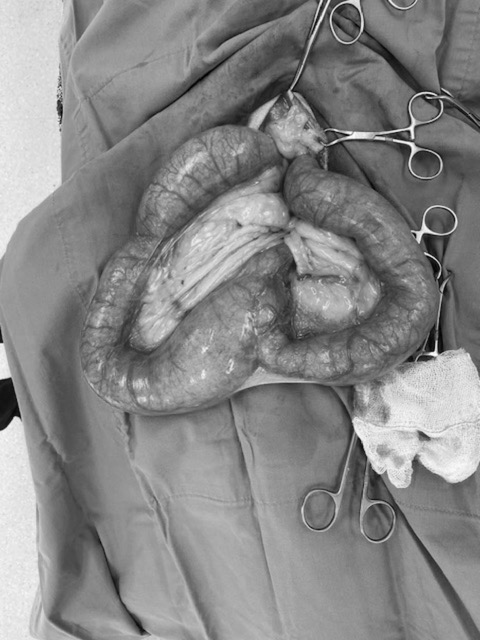
Pyometra is a surgical emergency. In this case, we recommended immediate hospital admission for surgery to remove the infected uterus. The uterus is commonly found to be engorged, full of pus.
Mammary tumours are also much more commonly seen in un-desexed females, especially as they get older. Surgical removal of these tumours with histopathology is recommended.
Desexing your dog eliminates the risk of pyometra and significantly reduces the chance of mammary tumours. If you ever notice unusual discharge or changes in your pet’s behaviour, please contact us right away — early action can save lives.
Procedure Cost
The mammary gland removal and pyometra surgery in this case cost a total of $2600.
Procedure photos for recent case